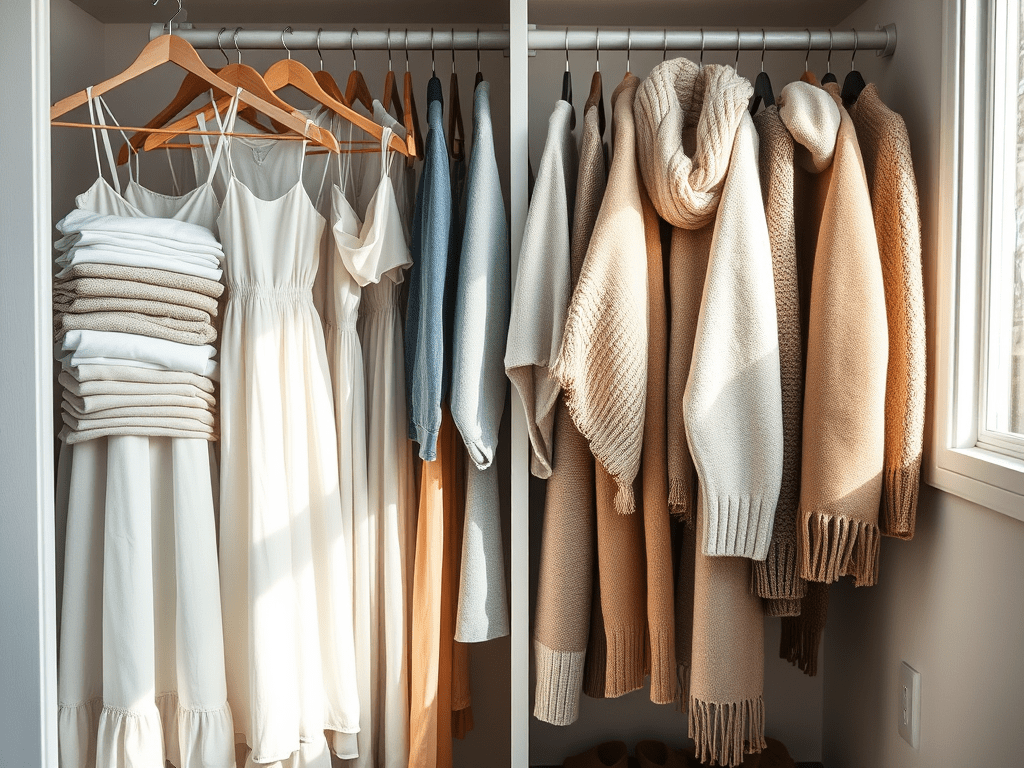
Seasonal Wardrobe Reset: Your Ultimate Guide to Transitioning from Heat to Chill (and Back Again!)
Transitioning your wardrobe between seasons is an excellent opportunity to declutter, organize, and refresh your clothing collection. By systematically assessing your apparel, you can ensure that your closet remains functional and stylish year-round. Here’s a comprehensive guide to help you navigate this process effectively:
1. Assess and Declutter Your Wardrobe

Begin by evaluating each item in your closet. Ask yourself: Does it fit? Is it comfortable? Have I worn it in the past year? If the answer is no, consider parting ways with the item. Donating gently used clothing to local charities or participating in recycling programs not only frees up space but also benefits others. For instance, H&M’s Garment Collecting program accepts unwanted clothes from any brand and offers discounts in return.
2. Clean and Repair Before Storing

Before storing off-season clothing, ensure each piece is clean. Launder or dry clean items to remove dirt, stains, and odors that could set over time. Address any necessary repairs, such as sewing loose buttons or fixing minor tears, to keep your wardrobe in top condition.
3. Choose Appropriate Storage Solutions

Select storage containers that suit your space and protect your clothing. Clear plastic bins allow for easy visibility, while fabric zippered storage containers are ideal for items like bulky sweaters and blankets. For example, the Budding Joy Fabric Zippered Storage Containers are praised for their roominess and durability. Utilize under-bed storage or high shelves for off-season items to maximize closet space.
4. Label and Categorize

Clearly label storage bins with the contents and corresponding season. This practice simplifies the process of retrieving items when the weather changes. Grouping similar items together, such as “Winter Sweaters” or “Summer Dresses,” further enhances organization.
5. Maintain a Functional Closet Layout

Keep your current season’s clothing accessible by placing them at eye level or within easy reach. Utilize slim hangers to save space and consider adding hooks or over-the-door organizers for accessories like scarves and bags. Regularly rotating your wardrobe ensures that your closet remains uncluttered and functional.
6. Store with Care

When storing delicate fabrics, opt for breathable garment bags to prevent damage. Avoid using plastic dry-cleaning bags, as they can trap moisture and lead to mildew. Incorporate natural repellents like cedar blocks or lavender sachets to protect against pests without the use of harmful chemicals.
7. Plan for Transitional Pieces

Keep versatile items that can be layered or worn across multiple seasons readily available. This approach accommodates unpredictable weather and maximizes the utility of your wardrobe. For example, lightweight cardigans or denim jackets can be useful during transitional periods.
Conclusion
Seasonal wardrobe organization isn’t just about swapping clothes; it’s about making intentional decisions that enhance your style and simplify your life. Whether you’re bundling up for a snowy January in the Northern Hemisphere or soaking up the summer sun in the Southern Hemisphere, a well-organized wardrobe ensures you’re always ready for the season ahead.
By decluttering, repairing, and storing your items with care, you not only make space for what you love but also extend the life of your clothing. Remember, fashion is as much about sustainability as it is about style. So, as you prepare for the upcoming season, embrace this process as a chance to refine, refresh, and redefine your wardrobe.

Do you have your own tips for organizing your wardrobe between seasons? We’d love to hear them! Share your ideas in the comment box below and let’s inspire each other to stay stylish all year long!
 VoxMundi - Fashion
Leave a comment